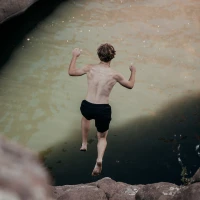
The thrills and exhilaration of freediving go beyond the conventional bounds of water sports. At the crossroads of athleticism and mindfulness, freediving is a sanctified journey into the depths of both the ocean and the self. It’s not just a sport; it’s a profound quest for inner discovery and a deep spiritual connection that embodies the essence of being at one with the universe. Freediving invites you to break away from the surface and plunge into the tranquil world below, where silence and serenity are the keys to unlocking profound self-awareness.
Embarking on this adventure demands more than physical prowess; it necessitates a symbiotic bond between mind, body, and the aquatic realm. As we dive deeper through this article, we explore how freediving serves as a transformative vehicle for self-discovery, meditation, and a deeper spiritual connection, capturing the very artistry of diving in its purest form.
Embarking on the Freediving Journey: The Union of Body and Breath
Freediving, the art of diving underwater on a single breath, offers a unique blend of intrinsic calmness and extreme adventure. It is an exercise in controlled breathing, discipline, and the profound connection between body and water.
The Freediving Essentials
Freediving isn’t merely about holding one’s breath and descending into the blue; it’s a holistic practice requiring specific techniques and a strong sense of body awareness. Key aspects include:
- Dynamic Apnea: The act of swimming with fins in a horizontal position underwater. It’s all about efficiency and grace in motion.
- Static Apnea: Testing your ability to stay underwater, motionless, for as long as your breath can carry you, perfecting the art of breath retention.
- Constant Weight Apnea: Diving with weights that remain constant to push personal depths while maintaining a streamline posture to conquer the deep.
The Breath Connection
The foundation of freediving is the breath. Proper breathing techniques are not just for survival but also for the meditative quality that induces a tranquil state of mind. It’s the understanding and control of one’s breathing pattern that defines the freediver’s experience.
The Spiritual Odyssey beneath Waves
At its core, freediving is an intimate encounter with silence. In that silence, an individual can confront the inner echoes of their existence and find a unique sense of peace, often leading to spiritual breakthroughs.
The Meditative State: Silence of the Sea
Freediving is analogous to a meditative practice. As you descend, the water envelops you, and a profound silence sets in. This environment, devoid of distractions, allows divers to experience a state of Zen, where focus and clarity emerge in the midst of the water’s embrace.
Synchronization with Nature’s Rhythms
Underwater, freedivers become attuned to the ocean’s rhythm, experiencing the ebb and flow of marine life and the subtleties of the aquatic landscape. This connection fosters a deep respect for nature and a unifying bond with the planet’s most expansive ecosystem.
Harnessing the Art of Mindfulness through Freediving
In freediving, mindfulness is the key to not only safety and performance improvements but also to a more spiritually fulfilling experience.
Present Moment Awareness
Focusing on the present moment is crucial, as any diversion can be detrimental in a setting where every second and every breath counts. Mindfulness in freediving helps practitioners to gain an unparalleled level of concentration, anchoring them to the here and now.
A Journey to Inner Self
As you dive deeper, so does your introspection. Freediving serves as a mirror, reflecting aspects of your inner self that are often unnoticed or suppressed on land. It offers a rare opportunity for self-confrontation and awareness, peeling away the superficial layers of daily existence.
Transformative Freediving Techniques
Employing both ancient wisdom and modern methodologies, freedivers utilize an array of techniques to deepen their practice and attain new levels of consciousness.
Yoga and Pranayama: An Elemental Fusion
Freedivers often turn to the realms of yoga and pranayama for optimized breathing control and flexibility. Yoga complements freediving with postures (asanas) that enhance lung capacity and diaphragm strength.
Breathwork for Resilience
By experimenting with pranayama, divers can learn to regulate their breath, improve their hold time, and create a serene state of mind even under pressure.
Visualization and Mental Rehearsal
Visualizing a successful dive is a potent technique. mental rehearsal can calm the mind and prepare the diver for the physiological and psychological responses one may encounter below the surface.
Embracing the Physical and Emotional Benefits of Freediving
The synergy of freediving’s physical discipline and its emotional impact results in a spectrum of benefits, contributing to an individual’s overall well-being.
The Physical Payoff
Regular freediving can lead to:
- Increased lung capacity and control
- Enhanced stamina and flexibility
- A stronger, more streamlined physique
The Emotional Enrichment
The emotional rewards are equally compelling:
- A greater sense of calm and reduced stress
- Elevated levels of happiness and contentment
- Improved confidence and self-esteem
Comparing Freediving Disciplines: A Glimpse into Varieties
While freediving presents itself as a singular concept, there are various disciplines within the sport that challenge divers in unique ways. Here’s a comparison of the primary freediving branches to help illustrate the sport’s diversity:
| Discipline | Description | Challenge Rating |
|---|---|---|
| Static Apnea | Breath-hold for time in a stationary position | Intensity: Medium |
| Dynamic Apnea (with fins) | Horizontal underwater swimming with fins | Intensity: High |
| Dynamic Apnea (no fins) | Horizontal underwater swimming without fins | Intensity: Very High |
| Constant Weight Apnea | Diving with a constant weight | Intensity: Medium |
| Free Immersion | Diving by pulling on a rope, without fins | Intensity: Moderate |
| Variable Weight Apnea | Diving with a variable weight and ascending | Intensity: High |
| No-Limits Apnea | Descending with a weight and ascending via buoyancy aid | Intensity: Extreme |
Each discipline is rooted in the same foundational techniques but challenges the diver’s physical and mental capabilities in different respects.
The Endless Horizon: Freediving’s Global Community and Environmental Impact
The Solidarity of Silence
The freediving community spans the globe, with enthusiasts uniting through the shared silence beneath the waves. This strong fellowship is rooted in the common pursuit of self-mastery and oceanic exploration.
Guardians of the Deep
Freedivers often become advocates for marine conservation. Encountering the underwater world’s vulnerability firsthand breeds a natural inclination to protect it.
In conclusion, the art of freediving is much more than a physical pursuit. It is a holistic journey of self-discovery and spiritual connection. As we delve into the depths, we find not just a new perspective on the world beneath the waves but also a clearer vision of the expansive potential within ourselves.
Diving into the unknown through freediving is not just a venture into the ocean’s depths; it’s an inward exploration, an unlocking of the soul, and an elemental dance with life’s purest form. Whether you seek adventure, enlightenment, or both, freediving stands as an awe-inspiring path to traverse the uncharted realms of spirit and self.